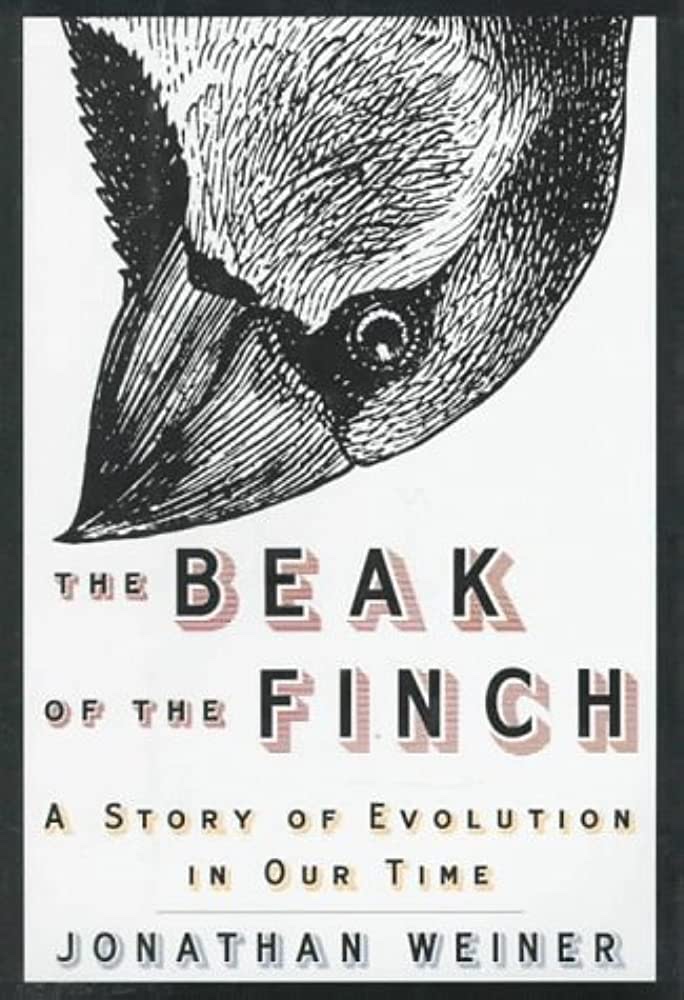
The Beak of the Finch : A Story of Evolution in Our Time is a non-fiction book written by Jonathan Weiner. The book outlines the findings of two researchers – Rosemary and Peter Grant, who spent 20 years on Daphne Major, an island in the Galapagos. Rosemary and Peter observe 20 generations of finches through various weather conditions on the same island. I will outline some of the key takeaways below:
- Individuals need to continuously evolve their skills and expertise with any changes in the external conditions.
- Nature is ruthless. It is always survival of the fittest. For example – Certain finches were solely dependent on cactuses, and when there was a decline in cactus population, that finch species declined with it. If a species can not adapt to change, it will dwindle.
- Hybridization can sometimes allow species to survive during trying conditions, while at other times, it provides no benefit. Hybridized finches had better survival chances as they were more fertile. On the other hand, the hybrid of tiger and lion – male liger/tigon is sterile. We never know how some genes may interact to either aid or harm the species’ future.
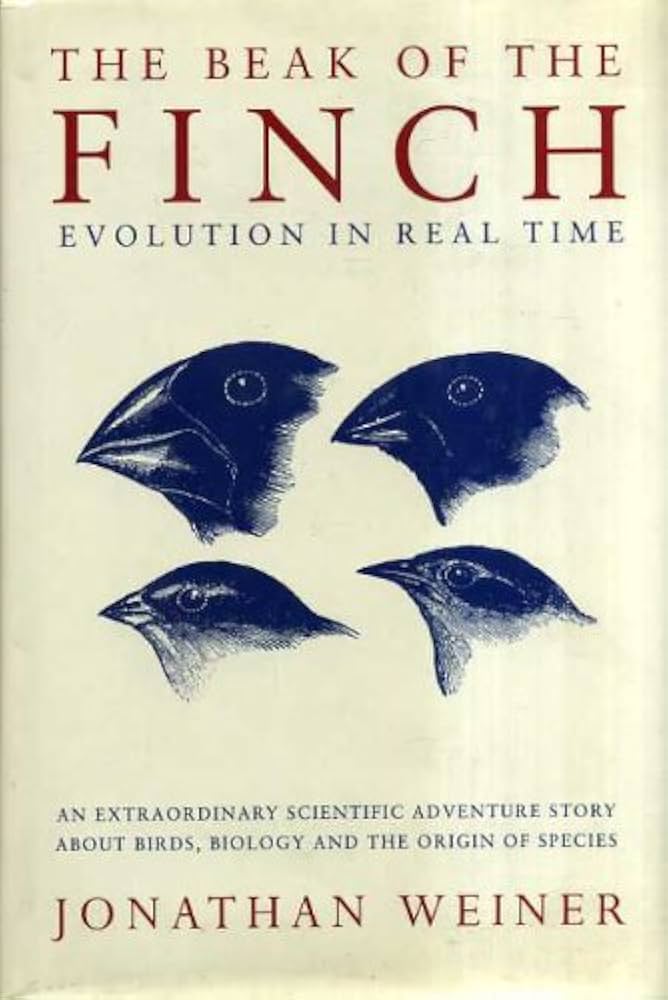
- Specialization is important to create a niche and survive. However, that same specialization can backfire and lead to extinction. For example – Finches with certain beaks had a harder time breaking through seeds during droughts, and finches with certain beaks had a harder time during floods.
- Interests of self will always supersede the interests of the group. Present is prioritized over the future. Animal/bird instinct wants reward now, rather than at a later time in the future.
- What doesn’t kill you makes you stronger – Bacteria resistant to antibiotics, pests resistant to pesticides, and mosquitoes resistant to insecticides.
- Important survival techniques are either passed down from parent to offspring through imitation, or individuals learn through trial and error, or it’s embedded in the genes, or it is just instinctual.
- The same concepts can be applied to our lives and our jobs. As we pursue higher education and specialize in our careers, we thrive within our society. However, if our job and skill is replaced by some technological advancement, we would have nothing valuable to contribute, and our position within the society would dwindle. In short, individuals need to specialize to thrive, however, that same specialization leads to the individuals’ downfall. In order to truly survive, we need to not only specialize, but adapt, keep learning, and become jack of all trades.
Overall, the book had some great research, and it was a recommended read by value investor, Mohnish Pabrai. It wasn’t until I read this book that I realized the Catch 22 situation – specialization needed for survival, but is also the achilleas heel for one’s downfall. It was also interesting to see how accurate Darwin was, and how the findings can be applied to other aspects of life. Hope you liked these key takeaways. Thank you!
Superior North LLC’s content is for educational purposes only. The calculators, videos, recommendations, and general investment ideas are not to be actioned with real money. Vyom Joshi is not a professional money manager or a financial advisor. Contact a professional and certified financial advisor before making any financial decisions. Please review the Disclaimer and Terms and Conditions.
 Superior North LLC